




Texas Instruments Current Sensing Solutions
Texas Instruments and Vishay are industry leaders in current sense monitor ICs and current sense resistors, respectively. Vishay boasts a comprehensive portfolio of precision current sense resistors that maintain a high degree of accuracy over temperature, load, and adverse conditions. Texas Instruments current shunt monitors measure the small voltages across the Vishay sense resistors by bringing a complete line of current sense amplifiers that can maintain stability and accuracy in almost any environment. Both are high-quality, trusted suppliers in their areas backed by countless years of experience and a comprehensive online support library.
When used together, Vishay and TI components work together seamlessly, complementing each other on any circuit board by providing quality solutions for the most challenging current sense applications.
Many applications today require measuring current flow through the system or flowing through a specific component or load of the system. Applications include precision motor control, high-efficiency DC-to-DC converters, and battery chargers for portable equipment. In each case, measuring the current flow is either used to improve efficiency or is vital for properly operating the equipment.
Current sense resistors are very low-value resistors used to measure the current flowing through them. The voltage across the resistor represents the current through the resistor, so if the user applies I = V/R as set down by the famous school teacher Georg Simon Ohm, the current will be proportional to the voltage across the resistor.
This simple introduction is the beating heart of this topic. The other important issues of precision current sensing - resistor selection, high-side or low-side monitoring, and choosing a sense amplifier - are all based on the most fundamental principles of electrical engineering.
There are three basic aspects to current sense monitoring:
- Choosing the low resistance sense resistor. If real estate is based on location, location, location, then selecting a resistor is based on precision, precision, precision.
- Choosing a sense amplifier. When sensing voltages across a resistance that is less than one ohm, small changes in voltage can have significant sense consequences.
- The location, location, location of the sense resistor. Here, we are talking about either sensing at the power supply, called high-side sensing or at the ground connection, called low-side sensing.
To accurately measure the tiny voltages across a resistor that is much less than a single ohm, a chip called a current sense amplifier is used. Also called current shunt monitors, these ICs are designed to measure the minute voltage drops across these sense resistors. A variety of components is available for current sense monitoring, each with its tradeoffs and advantages.
Featured TI Current Sensing Products

Texas Instruments INA225 Current Shunt Monitors
Current-sense amplifier that senses drops across current-sensing resistors at common-mode voltages.

Texas Instruments INA230 Bidirectional Current / Power Monitor
Monitors shunt voltage drops and bus supply voltage, with high- or low-side sensing.

Texas Instruments INA300/INA300-Q1 Current-Sense Comparator
Detect overcurrent conditions through measuring the voltage developed across a current sensing.
Vishay Current Sensing Products
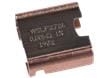
Vishay / Dale Current Sensing Resistors
Surface mount, fixed, discrete resistors available in a wide range of package sizes and resistances.