


NXP Semiconductors MCX W72 Secure Wireless Microcontrollers

NXP Semiconductors MCX W72 Secure Wireless Microcontrollers are secure and ultra-low-power wireless microcontrollers optimized for Bluetooth® Low Energy 6.x applications. These microcontrollers combine multiprotocol wireless connectivity, expanded memory, advanced security, and dedicated radio processing for next-generation Matter®, Bluetooth, and secure localization-enabled connected devices. The MCX W72 integrates a 96MHz Arm® Cortex®-M33 application core with an independent radio subsystem supporting Bluetooth Low Energy, Zigbee®, Thread®, and Matter®. The dedicated radio subsystem includes its own Arm Cortex-M33 core and memory, allowing wireless processing to operate separately from the primary application. An integrated Localization Compute Engine accelerates Bluetooth Channel Sounding calculations while reducing ranging latency and power consumption.
With up to 2MB of flash, 264kB SRAM, dedicated radio memory, and support for over-the-air firmware updates, the MCX W72 is designed for feature-rich connected applications. Integrated EdgeLock® Secure Enclave technology provides secure boot and debug, cryptographic acceleration, secure key management, and support for device provisioning and lifecycle management. The MCX W72 is supported by the MCUXpresso Developer Experience, including the MCUXpresso SDK with connectivity stacks and software examples. Support for Zephyr™ RTOS and FreeRTOS helps developers select the software environment that best fits their connected application and move from evaluation to development.
Features
- Wireless connectivity and channel sounding:
- Bluetooth® Low Energy 6.x-class radio with Bluetooth channel sounding support
- Integrated Localization Compute Engine to reduce ranging latency
- Concurrent Bluetooth Low Energy and IEEE 802.15.4 operation
- Independent radio subsystem with a dedicated Arm® Cortex®-M33 core and memory
- Up to 24 simultaneous Bluetooth Low Energy hardware connections
- Programmable transmit output power up to +10dBm
- On-chip balun with a single-ended bidirectional RF port
- Processing and memory:
- Arm® Cortex®-M33 application core operating at up to 96MHz
- 2MB program flash with ECC
- 264kB SRAM with ECC and parity
- Dedicated 512kB radio flash and 171kB radio SRAM
- Expanded memory supporting connectivity stacks and over-the-air firmware updates
- Security:
- EdgeLock® secure enclave, core profile
- Secure boot and debug
- Secure key generation, storage, and management
- Hardware-accelerated symmetric and asymmetric cryptography
- Flash access protection and optional on-the-fly decryption
- Provisioning and lifecycle-management readiness with EdgeLock 2GO
- Peripherals and interfaces:
- 16-bit SAR ADC and two high-speed analog comparators
- Flexible timer, PWM, and DMA capabilities
- UART, SPI, I²C, MIPI I3C, and FlexIO interfaces
- Optional FlexCAN interfaces with CAN FD support
- Real-time and low-power timers
- DC/DC converter supporting buck and bypass operating modes
- Software and development:
- MCUXpresso Developer Experience with SDK, connectivity stacks, and software examples
- IDE support, including MCUXpresso IDE and Visual Studio Code
- Pin, clock, peripheral, security, and memory configuration tools
- Security programming and provisioning tools
- Zephyr™ RTOS and FreeRTOS support
- Operating characteristics and packaging:
- -40°C to +125°C operating temperature range
- 1.8V to 3.6V operating voltage range
- AEC-Q100 qualified with industrial grade
- 7mm x 7mm 48-QFN and 8mm x 8mm 112-BGA packages
Applications
- Channel sounding and location-aware:
- Secure access control
- Proximity detection
- Indoor localization
- Asset tracking
- Location-aware connected devices
- Building and industrial IoT:
- Building security and surveillance
- Building safety detectors
- Smart lighting
- Climate control
- Heat and energy management
- Smart home and consumer:
- Smart door locks
- Home control and automation
- Smart sensors
- Connected small appliances
- Thermostats
- Air conditioning
- Window coverings
Block Diagram

Associated MCUs
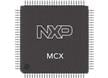
NXP Semiconductors MCX W Wireless Microcontrollers
Secure, wireless MCUs for compact, scalable, and innovative designs.
Development Tools
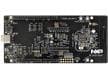
NXP Semiconductors FRDM-MCXW72 MCU Development Board
Compact, scalable, and cost-effective platform for rapid prototyping and evaluation of the MCX W72.

NXP Semiconductors MCXW72-LOC Localization Evaluation Board
Compact, cost-effective MCX W72 board for multiprotocol and Channel Sounding evaluation.