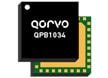

QPQ5604SR

Qorvo
772-QPQ5604SR
QPQ5604SR

Mfr.:

Description:
Signal Conditioning 6GHz Wi-Fi U-NII 5-8 bandBoost Filter

Lifecycle:
New Product:
New from this manufacturer.
ECAD Model:
Download the free Library Loader to convert this file for your ECAD Tool. Learn more about the ECAD Model.

In Stock: 200

Stock:
200 Can Dispatch Immediately
Factory Lead Time:
12 Weeks Estimated factory production time for quantities greater than shown.
Minimum: 1   Multiples: 1
Unit Price:
£-.--
Ext. Price:
£-.--
Est. Tariff:

Pricing (GBP)

Qty. Unit Price
Ext. Price
£4.44 £4.44
£2.96 £29.60
£2.75 £68.75
Full Reel (Order in multiples of 100)
£2.43 £243.00
£2.29 £458.00
£2.05 £1,025.00
£1.74 £1,740.00
£1.68 £4,200.00
£1.65 £8,250.00

Product Attribute Attribute Value Select Attribute
Qorvo
Product Category: Signal Conditioning
RoHS:  
Signal Conditioning
Signal Conditioning
5.945 GHz to 7.125 GHz
320 MHz
SMD/SMT
- 20 C
+ 95 C
Reel
Cut Tape
Brand: Qorvo
Insertion Loss: 2.3 dB
Moisture Sensitive: Yes
Mounting: Board Mount
Factory Pack Quantity: 100
Subcategory: Filters
Type: BandBoost Filter
Products found:
To show similar products, select at least one checkbox
Select at least one checkbox above to show similar products in this category.
Attributes selected: 0

USHTS:
8542390090
MXHTS:
8542399999
ECCN:
5A991.g

QPQ5604 Bulk Acoustic Wave Band-Pass Filter

Qorvo QPQ5604 Bulk Acoustic Wave (BAW) Band-Pass Filter is a high-performance, high-power BAW band-pass filter with extremely steep skirts, simultaneously exhibiting low loss in the Wi-Fi® UNII 5-8 band and high near-in rejection in the UNII 1-3 band. The Qorvo QPQ5604 filter module is specifically designed to enable industry-leading capacity performance in Wi-Fi applications that result in higher power capability in more Wi-Fi channels than systems with no or traditional filter solutions. End users will exhibit an improved capability to deliver features that take advantage of sub-banding the 5GHz from 6GHz Wi-Fi spectrum in use cases such as tri-radio Wi-Fi mesh applications. An industry-standard footprint negates as many external passive placements to help end users ease integration into circuits.