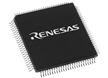

9ZML1232EKILF

Renesas Electronics
972-9ZML1232EKILF
9ZML1232EKILF

Mfr.:

Description:
Clock Buffer 9ZML1232E DB1200ZL MUX DERIV

ECAD Model:
Download the free Library Loader to convert this file for your ECAD Tool. Learn more about the ECAD Model.

In Stock: 152

Stock:
152 Can Dispatch Immediately
Factory Lead Time:
12 Weeks Estimated factory production time for quantities greater than shown.
Minimum: 1   Multiples: 1
Unit Price:
£-.--
Ext. Price:
£-.--
Est. Tariff:

Pricing (GBP)

Qty. Unit Price
Ext. Price
£9.76 £9.76
£7.94 £79.40
£7.57 £189.25
£6.57 £657.00
£6.28 £1,055.04
£5.72 £2,882.88
£4.98 £5,019.84
2,520 Quote

Product Attribute Attribute Value Select Attribute
Renesas Electronics
Product Category: Clock Buffer
RoHS:  
12 Output
150 MHz
3.6 ns
LP-HCSL
VFQFPN-72
HCSL
400 MHz
3.135 V
3.465 V
9ZML1232E
- 40 C
+ 85 C
Brand: Renesas Electronics
Duty Cycle - Max: 55 %
Moisture Sensitive: Yes
Mounting Style: SMD/SMT
Operating Supply Current: 13 mA
Packaging: Tray
Product: Clock Buffers
Product Type: Clock Buffers
Factory Pack Quantity: 168
Subcategory: Clock & Timer ICs
Type: Low Power
Products found:
To show similar products, select at least one checkbox
Select at least one checkbox above to show similar products in this category.
Attributes selected: 0

This functionality requires JavaScript to be enabled.

CNHTS:
8542399000
CAHTS:
8542390000
USHTS:
8542390090
MXHTS:
8542399901
ECCN:
EAR99

9ZML12x2E Clock Buffers

Renesas Electronics 9ZML12x2E Clock Buffers are second-generation 2-input/12-output differential MUX for Intel Purley and newer platforms. These clock buffers exceed the demanding DB1200ZL performance specifications and are backward compatible with the 9ZML1232B clock buffer. The 9ZML12x2E buffers utilize low-power, High-speed Current Steering Logic (HCSL) compatible outputs to reduce power consumption and termination resistors. Features include nine selectable SMBus addresses, Phase-Locked-Loop (PLL) or bypass mode, spread spectrum compatibility, and SMBus interface. These clock buffers provide two configurable low-drift I2O settings, one for each input channel, allowing I2O tuning for various topologies. Typical applications include servers, storage, networking, and PCI-Express Gen1–4 or QPI/UPI applications.